Nobody buys on the first ad: the 2-layer system for LinkedIn Ads
How to use a tightly targeted image campaign to build the remarketing list that actually converts.
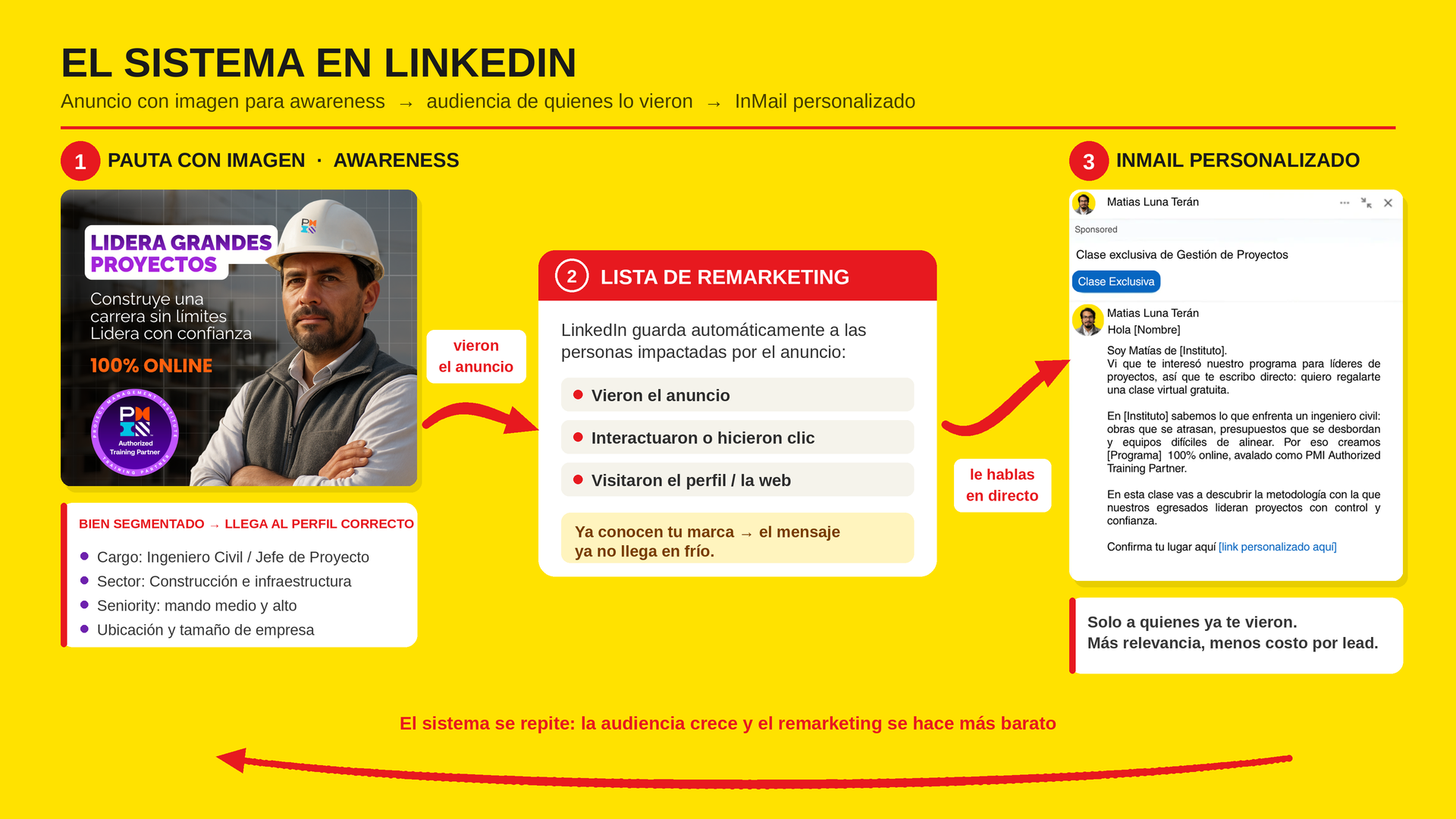
Most LinkedIn Ads accounts fail for the same reason: they ask for a meeting from someone who had never seen the brand, while paying the most expensive CPM on the market. The system I use does the opposite. A first image layer, surgically targeted, whose only job is to manufacture a list of identified people. And a second layer that talks only to that list. The first campaign does not sell: it produces the asset the second one sells with.
1. Target before you design: the list is the product
On Meta you can open up targeting and let the algorithm find your buyer. On LinkedIn you cannot. The CPM is several times higher and conversion volume rarely gets high enough for the system to correct a badly defined audience. If you target poorly, you do not just get an expensive campaign: you get a contaminated remarketing list that carries the mistake for months.
Define the ICP in three layers and no more: company (industry and size), person (job function and seniority) and geography. Use job function and seniority instead of loose job titles: titles in LATAM are inconsistent, and "Commercial Manager" leaves out "Head of Growth".
Practical rule: never combine more than two targeting dimensions in the same ad set. Aim for an audience between 50,000 and 300,000 members. Smaller saturates within weeks; bigger stops being a list and becomes cold traffic again.
And something almost nobody does: turn off Audience Expansion and the LinkedIn Audience Network in this campaign. Both give you cheaper impressions in exchange for people who are not your ICP. You are building a list, not buying reach.
2. The image has one job: earn a click
Here is the technical detail that reshapes the whole campaign design: when you retarget by single-image ad, LinkedIn builds the audience from people who clicked, not from people who saw it. An impression does not enter the list.
That means a pretty banner with your logo is money burned twice: it does not sell and it does not feed the second layer either. The creative needs to trigger a micro-commitment.
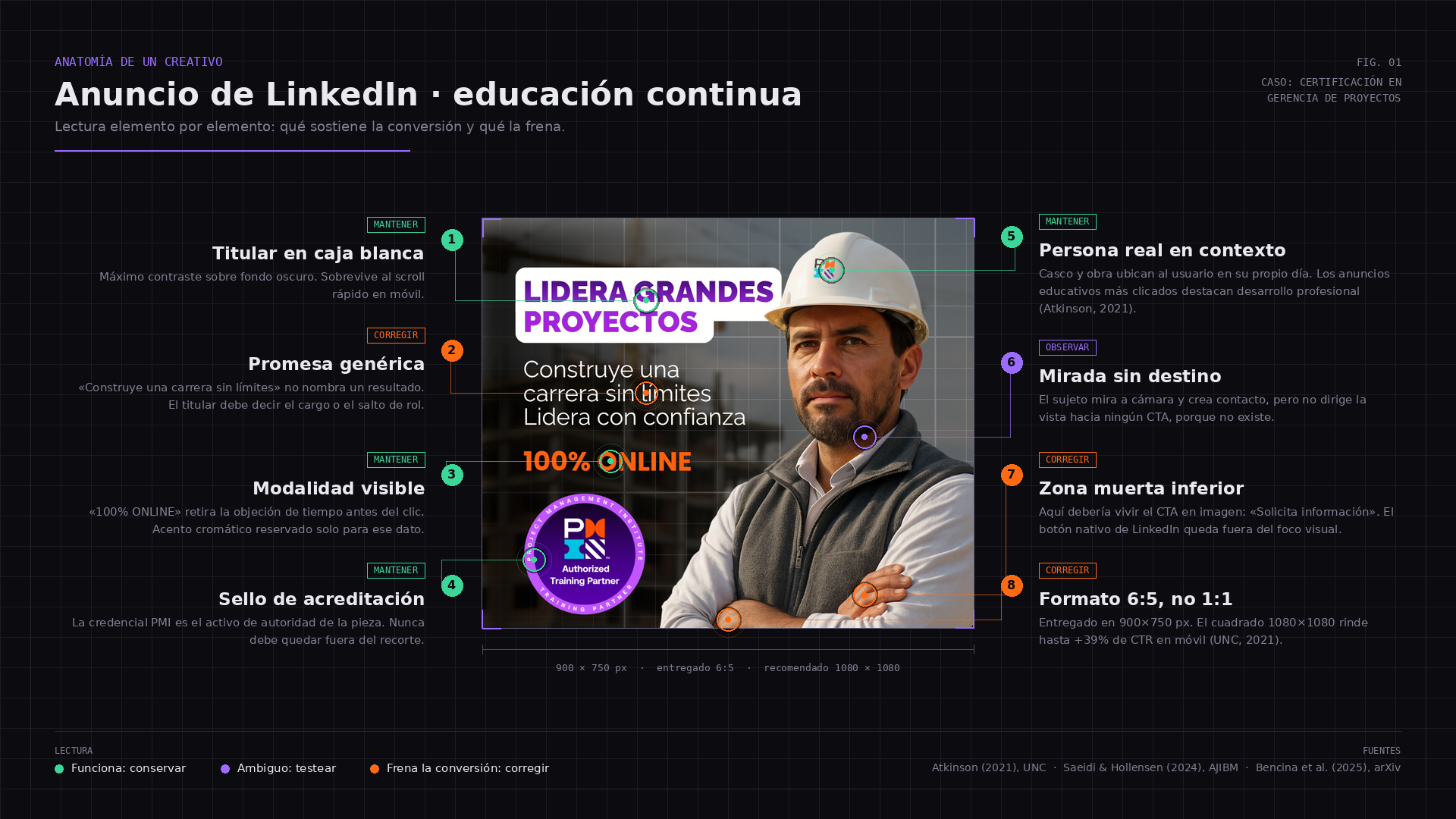
Image: 1200x627 or 1080x1080. No more than 8 words inside the piece, legible in a mobile feed.
Message: a specific statement about the ICP's pain, not about your product. "Your sales team spends 11 hours a week building proposals" works; "Automation solutions for companies" does not.
Campaign objective: if you plan to retarget by clicks, the Brand Awareness objective works against you, because it optimizes for impressions. Use Engagement or Website Visits.
If you do not want to depend on the click, change the format: video ads and document ads let you build audiences by percentage consumed (25%, 50%, 75%). There you can retarget someone who only watched.
3. Create the remarketing audience on day 1, not day 30
This is the most expensive and the most silent mistake. LinkedIn audiences only accumulate from the moment you create them. If you launch the awareness campaign in August and create the list in September, that first month of spend does not exist.
Before hitting Publish on layer 1, go into Matched Audiences and create: engagement with the single-image ad (90-day window), visitors to your LinkedIn company page, and website visitors via the Insight Tag, with at least one rule per high-intent page (pricing, case studies, demo).
Available windows range from 30 to 365 days. For B2B cycles, 90 days is the healthy point: enough memory, without people who already forgot who you are. Keep in mind that an audience needs around 300 members before it can be used; until then the layer 2 campaign will not deliver.
4. Layer 2 changes the objective, the creative and the ask
Recycling the awareness ad into remarketing wastes the list. Three things change.
The objective. You move to Lead Generation or Conversions. Native forms usually outperform sending people to a landing page, because they do not pull the person off the platform and they prefill their data.
The creative. From "this hurts" to "this is how it gets solved, and here is the proof": a case study with a name and a number, a downloadable document, a testimonial. The person already recognizes the brand; now they need a reason to risk their data.
The exclusions. Exclude current customers and anyone who already filled the form. Without this you will pay to talk to your own book of business.
On budget: start at 70/30 in favor of layer 1 while the list fills up, and move toward 50/50 once it passes 5,000 members. And watch weekly frequency: the list is small by definition, so it burns fast. If it goes above 5 or 6 impressions per person in 7 days, rotate the creative.
5. Measure the list, not the first campaign's CPL
Judging layer 1 by the leads it generates is the fastest way to kill the system before it works. Each layer has its own metric.
Layer 1 (awareness): cost per member added to the list (spend divided by unique clicks) and audience growth rate. CTR on image ads usually moves around 0.4% to 0.6%; verify it against your own historical data. Its product is the list.
Layer 2 (remarketing): CPL, form open rate and, above all, lead to meeting booked. A low CPL with zero meetings means you targeted badly in layer 1, not that the form is failing.
Frequently Asked Questions
- What is the minimum budget I need?
- LinkedIn requires a minimum of USD 10 per day per campaign, but that is not an operating budget. For the list to pass 300 members and have useful volume, plan on USD 30 to 50 per day for 4 to 6 weeks before turning on layer 2.
- Why not go straight to conversion?
- You can, and it is worth testing. But on LinkedIn the high CPM punishes cold traffic: you pay a premium price to reach someone who has no reason to answer you yet. Remarketing lets you concentrate that expensive CPM on people who already raised their hand.
- Image or video?
- Image is cheaper to produce and enough if the copy carries the message. Video and document ads have a structural advantage: they build audiences by percentage consumed, without depending on a click. If budget allows, run image for volume and document for depth.
- When do I turn layer 1 off?
- Never completely. If you turn it off, the list stops refreshing and layer 2 saturates within weeks. It is a two-beat system, not a sequence with an ending.
Conclusion
The image ad on LinkedIn is not the campaign: it is the machine that manufactures the campaign's audience. Target precisely before designing, create the audiences before launching, give the first layer a creative that earns the click, and save the sales ask for people who already recognize you. It is a boring, repeatable system, which is exactly why it works.